
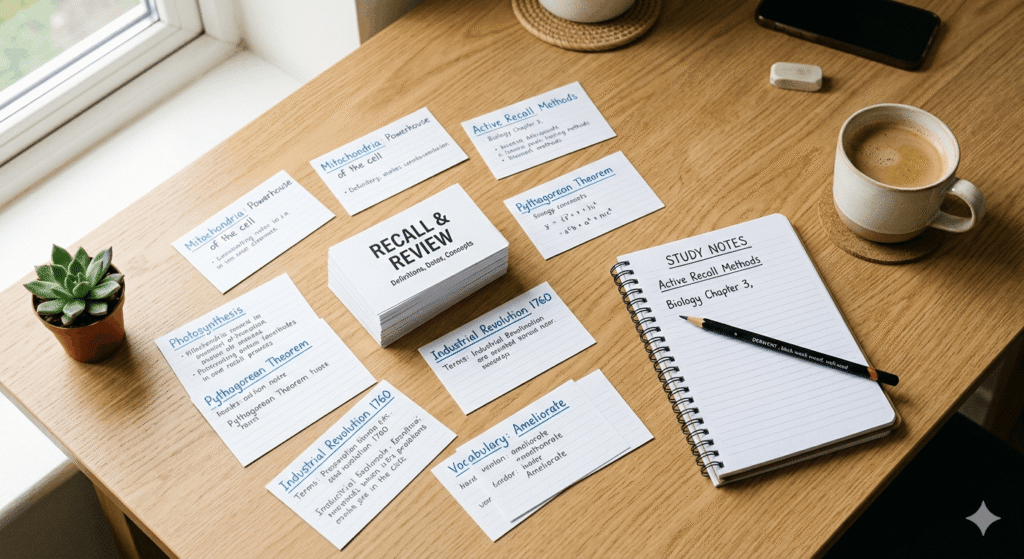
If you have ever flipped through a stack of flashcards the night before an exam and felt like nothing was sticking, you are not alone.
Flashcards are one of the most popular study tools out there. But using them the wrong way can waste hours of your time. The good news? With a few simple changes, they can become one of the most powerful memory tools you will ever use.
This guide covers the best way to memorize flashcards so that what you study actually stays in your brain, not just for the test, but for the long run.
Why Flashcards Work So Well for Memorization
Before jumping into the tips, it helps to understand why flashcards are effective in the first place.
Flashcards work because they rely on two well-studied learning techniques:
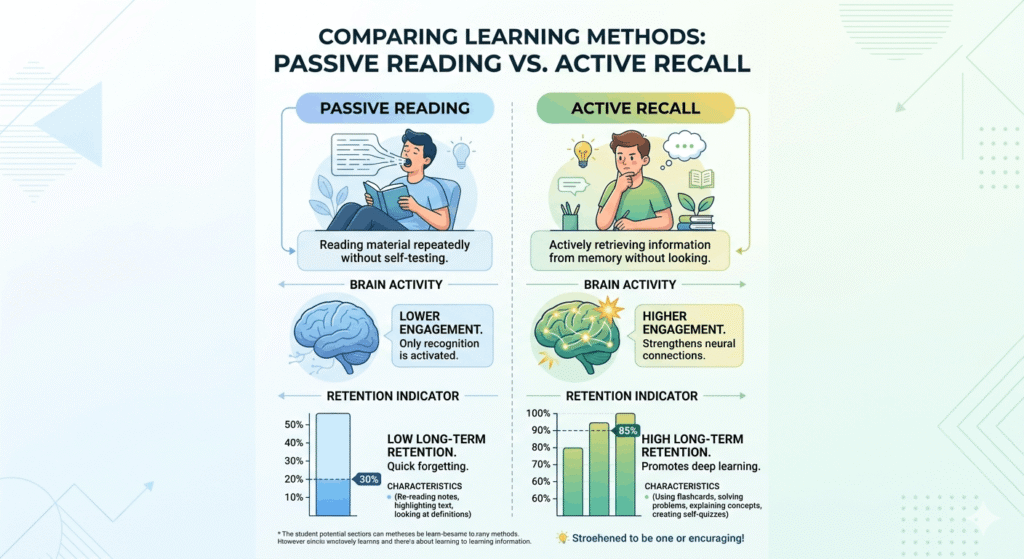
- Active recall — instead of passively reading notes, you actively try to retrieve information from memory. This effort strengthens the memory itself.
- Spaced repetition — instead of cramming, you review material at increasing intervals over time. This keeps information fresh with less effort.
Research from cognitive psychology consistently shows that both of these methods lead to much better long-term retention than re-reading or highlighting. So when you use flashcards the right way, you are working with your brain, not against it.
The 10 Best Ways to Memorize Flashcards
1. Use Active Recall Every Single Time
This is the most important habit you can build.
When you pick up a flashcard, do not just glance at the question and immediately flip it. Instead, pause. Try to recall the answer from memory before looking at the back.
Even if you get it wrong, the act of trying to remember something makes the memory stronger. This is called the testing effect, and it is one of the most replicated findings in memory science.
Most students read flashcards passively, which is almost as useless as re-reading a textbook. The struggle to remember is where the real learning happens.
2. Follow a Spaced Repetition Schedule
Spacing out your reviews is one of the smartest things you can do.
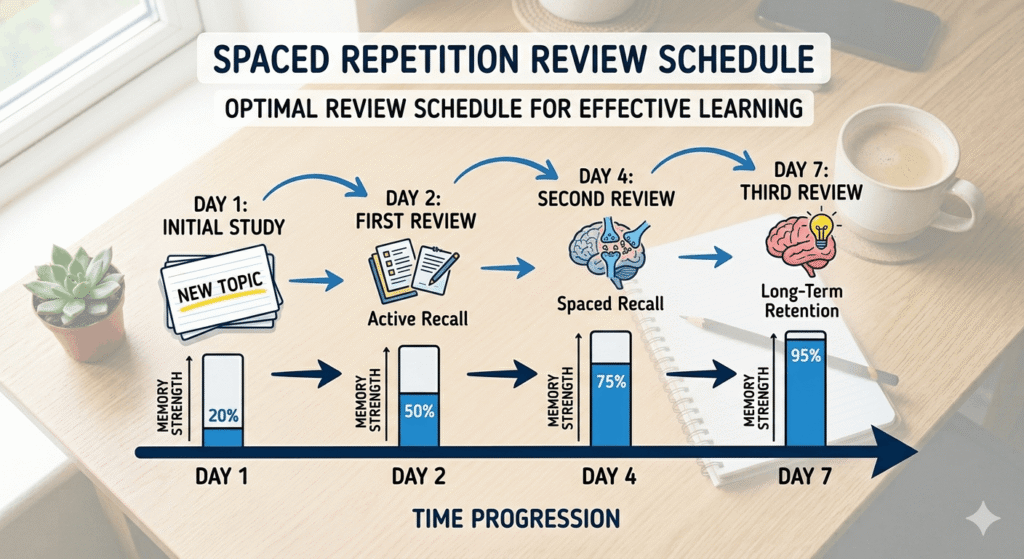
Here is a simple schedule to follow:
- Review a new card on Day 1
- Review it again on Day 2
- Then on Day 4
- Then on Day 7
- Then once every two weeks after that
Cards you know well get pushed further out. Cards you keep getting wrong come back sooner. This method means you spend more time on what you actually need to learn.
There is a offical anki reasearch on spaced repetation.
Apps like Anki use spaced repetition automatically, which makes the process much easier to maintain.
3. Keep Each Flashcard Focused on One Idea
One of the biggest mistakes students make is cramming too much onto a single card.
If your flashcard has four facts, a definition, and an example all on the back, your brain does not know what to focus on. You end up skimming instead of truly learning.
The golden rule: one card, one concept.
For example, instead of one card for “the French Revolution,” create separate cards for the causes, the key dates, the major figures, and the outcomes. Each card becomes a clean, focused memory target.
4. Say the Answer Out Loud
This might feel a bit odd at first, but it really does help.
When you speak an answer out loud instead of just thinking it quietly, you are engaging more of your brain. You hear yourself say it, which adds an auditory layer to the memory. You also catch gaps in your understanding faster when you have to articulate something out loud.
Try explaining the concept as if you are teaching it to someone else. If you can explain it clearly, you know it well.
5. Write Your Own Flashcards
Pre-made flashcard decks are convenient, but making your own is better for learning.
The act of writing a card forces you to understand the material first. You have to decide what the key idea is, how to phrase the question, and what the clearest answer looks like. That process alone encodes the information more deeply.
If you are short on time, tools like FlashLearnAI.site let you paste your notes or upload a PDF and generate a full flashcard deck in seconds. It is a practical way to get the speed of pre-made cards while still working from your own study material.
If you prefer working in a familiar tool, Microsoft Word is actually a solid option. Here is a simple way to create your own flashcard deck without needing any special software.
If your notes are already saved as a PDF, you also have more options than you might think for turning those files into printed study cards quickly and cheaply.
6. Use Images and Visual Cues
Our brains are wired for images. A plain text card is fine, but adding a simple diagram, symbol, or even a hand-drawn sketch can make a card much more memorable.
This is related to what psychologists call the picture superiority effect. Words paired with visuals are recalled far more reliably than words alone.
You do not need to be an artist. A rough sketch, a color code, or even a mnemonic visual in your mind works well.
7. Do Not Skip the Cards You Get Wrong
It is tempting to set aside difficult cards and focus on the ones you know. But that is the opposite of what you should do.
The cards you keep getting wrong are exactly the ones that need the most attention. Every time you struggle with a card and then review the answer, you are building a stronger memory trace. Over time, even the hardest cards become easy.
One useful trick: put cards you get wrong in a separate pile and review that pile every day until they become second nature.
8. Study in Short, Focused Sessions
Long study sessions feel productive, but they often are not.
Your ability to focus drops after about 25 to 30 minutes of intense mental work. After that, retention suffers. Short, frequent sessions are far more effective than one long marathon session.
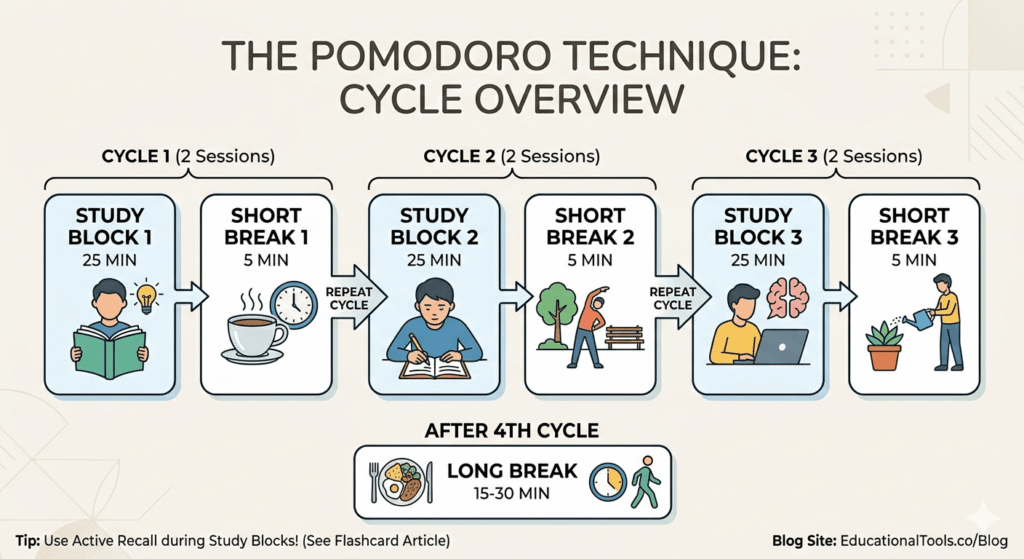
Try this structure:
- Study for 25 minutes
- Take a 5-minute break
- Repeat two or three times
This is sometimes called the Pomodoro technique, and it fits very naturally with flashcard review. Each session stays fresh and your brain gets time to consolidate what it just learned.
9. Review Before Bed and After Waking Up
The timing of your review matters more than most people realize.
Studying before sleep works well because your brain consolidates memories during sleep. When you review flashcards in the final hour before bed, your brain processes and reinforces those memories overnight.
Reviewing again in the morning takes advantage of that consolidation. A quick five-minute pass through your deck first thing in the morning is one of the most efficient uses of study time you will find.
10. Mix Up Your Card Order
If you always review your flashcards in the same order, you start to guess the next card based on position rather than actual memory. This is called the serial position effect, and it creates a false sense of knowing the material.
Shuffle your deck regularly. Use a randomized digital deck if you study on your phone or computer. This forces your brain to retrieve each answer independently, which builds stronger and more reliable memories.
Common Mistakes That Kill Flashcard Memorization
Even with the best intentions, students often fall into these traps:
Passive reading. Flipping through cards without actively trying to recall the answer does very little for memory. Always try to retrieve before you look.
Too many cards at once. Starting with 200 new cards in one session is overwhelming. Limit new cards to 20 to 30 per day and focus on reviewing existing ones.
Ignoring difficult cards. Hard cards need more repetition, not less. Do not avoid them.
Cramming right before an exam. Flashcards are a long-term tool. Starting the night before an exam is far less effective than reviewing consistently over weeks.
Writing overly complex cards. Long, detailed cards are harder to process. Keep questions and answers short and direct.
Flashcard Memorization Methods Compared
| Method | Best For | Retention | Effort Required |
|---|---|---|---|
| Passive reading | Quick review | Low | Very Low |
| Self-testing with flashcards | Concept memorization | High | Medium |
| Spaced repetition (Anki, etc.) | Long-term retention | Very High | Low to Medium |
| Writing your own cards | Deep understanding | High | Medium |
| Loci method with flashcards | Complex topics | Very High | High |
How to Build a Flashcard Habit That Sticks
Knowing the best way to memorize flashcards is one thing. Actually doing it consistently is another.
Here are a few ways to build the habit:
- Attach flashcard review to something you already do every day. Review cards with your morning coffee, on your commute, or right after lunch.
- Keep your deck accessible. If your flashcards are in an app on your phone, you are much more likely to review them in spare moments.
- Track your streaks. Many apps show you how many days in a row you have studied. That streak becomes surprisingly motivating to maintain.
- Start small. Even five minutes a day is enough to make real progress over a few weeks.
Consistency beats intensity every single time with spaced repetition. A few focused minutes daily will outperform a long study session once a week.
FAQ Section
How many flashcards should I review per day?
It depends on your schedule, but most learners do well with 20 to 30 new cards per day plus reviewing older cards due for repetition. Quality and consistency matter more than volume.
Is it better to use digital flashcards or physical cards?
Both work well. Physical cards have the advantage of slowing you down and making you more deliberate. Digital cards, especially apps that use spaced repetition like Anki, are more efficient for large decks because they schedule reviews automatically
How long does it take for flashcard memorization to work?
You can notice improvements in recall within days using active recall methods. For long-term retention with spaced repetition, most students start seeing strong results after two to four weeks of consistent practice.
Should I use pictures or just text on my flashcards?
Adding visuals whenever possible improves recall significantly. Even a simple diagram or symbol helps your brain form a stronger memory. Use images alongside text rather than replacing it entirely.
What is spaced repetition and why does it matter?
Spaced repetition is a learning technique where you review information at gradually increasing intervals. It works because memories strengthen when recalled right before you are about to forget them. Tools like Anki and other flashcard apps use algorithms to schedule your reviews automatically.
Can I memorize flashcards the night before an exam?
You can, but it is not ideal. Last-minute review can help with surface-level recall but is unlikely to build deep understanding or long-term retention. Flashcards work best as part of an ongoing study routine over days or weeks, not a one-night session
Is it okay to use pre-made flashcard decks?
Yes, but making your own is usually better for understanding. If you use someone else’s deck, go through each card carefully rather than passively flipping through them. You can also edit pre-made cards to better match your own notes and learning style
Conclusion
Flashcards have been around for centuries, and they are still one of the best study tools available because they work with how your memory actually functions.
The best way to memorize flashcards is not complicated. Use active recall every time. Space out your reviews. Keep cards simple and focused. Study in short sessions. Do not avoid the hard ones.
Small habits done consistently lead to big results. Start with two or three of the tips from this guide and build from there. Your memory is more capable than you think — you just need to train it the right way.